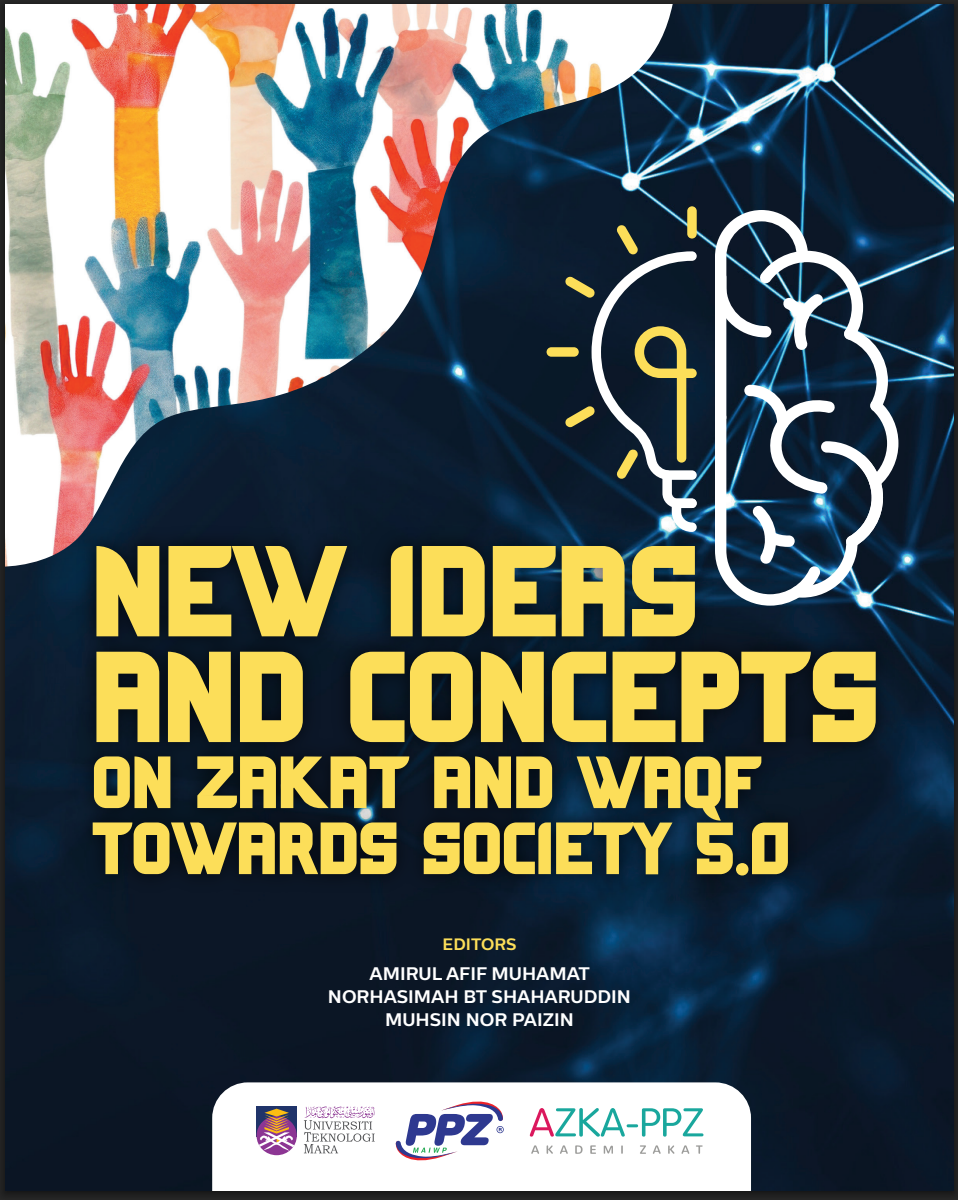
Home / CHAPTERS IN BOOK NEW IDEAS AND CONCEPTS ON ZAKAT AND WAQF TOWARDS SOCIETY 5.0 Efforts to modernize zakat and waqf management in Malaysia are increasingly focused on integrating advanced technologies to address traditional challenges such as transparency, efficiency, and public trust. As society transitions toward Society 5.0, which emphasizes human-centric technological convergence, the adoption of blockchain, artificial intelligence (AI), and digital platforms is viewed as a primary strategy for enhancing Islamic social finance. Technological Applications in Zakat and Waqf Blockchain Technology: Blockchain is a decentralized, immutable digital ledger that records transactions securely across a network. It enhances transparency by allowing stakeholders to track funds from contribution to distribution, thereby reducing the risk of fraud and mismanagement. Smart Contracts: These are self-executing agreements with terms coded directly into the blockchain. In zakat and waqf management, smart contracts can automate fund allocation based on predefined criteria, such as verifying a recipient’s financial need or ensuring waqf income is distributed according to donor intentions. Artificial Intelligence (AI) and Big Data: AI can analyze vast datasets to identify vulnerable populations, predict community needs, and optimize resource allocation. For example, AI-driven platforms can tailor support programs like skills training for zakat recipients to help them break the cycle of poverty. Digital Platforms and Crowdfunding: Mobile applications and online portals like WaqfChain and GlobalSadaqah simplify the donation process, enabling global participation and providing real-time updates on project progress. Strategic Benefits and Success Models Enhanced Efficiency and Transparency: Digital systems reduce administrative costs and bureaucratic delays. Blockchain provides a permanent audit trail, fostering trust among donors. Success Stories: Malaysia: The Selangor Zakat Board has introduced digital platforms for calculation and payment, while WaqfChain leverages blockchain for asset management. Indonesia: The Indonesian Waqf Board uses blockchain to record and verify assets, increasing public trust. UAE and Turkey: The UAE uses AI for proactive beneficiary outreach, while Turkey employs smart contracts for automated zakat distribution. Challenges and Future Directions Implementation Hurdles: High initial costs, a shortage of technical expertise, and outdated legal frameworks are significant barriers. Ethical and Shariah Considerations: Integrating technology must align with Islamic values. Concerns include data privacy, algorithmic bias, and the potential “digital divide” that may marginalize those without internet access. Strategic Recommendations: To achieve the goals of Society 5.0, policymakers should develop standardized regulatory frameworks, invest in capacity building for personnel, and foster public-private partnerships to drive innovation. Published In Malaysia by: Pusat Pungutan Zakat (PPZ-MAIWP)Wisma PPZ, 68-1-6,Dataran Shamelin, Jalan 4/91,Taman Shamelin Perkasa,56100 Kuala Lumpur Email: azka@zakat.com.my Website: https://azka.zakat.com.my In Collaboration With: Faculty of Business and ManagementUniversiti Teknologi MARA (UiTM)Cawangan Selangor42300 Selangor Darul Ehsan Email: heafpp@uitm.edu.my Website:https://fbm.uitm.edu.my/ List of Chapters THEME 1: TECHNOLOGICAL IMPACT ON ZAKAT & WAQF (IMPAK TEKNOLOGI TERHADAP ZAKAT & WAKAF) CHAPTER 1 POTENSI TEKNOLOGI BLOCKCHAIN DALAM PENGURUSAN ZAKAT DI MALAYSIA Nur Syahirah Mohd Noh, Nuruul Hidayah Mansor & Muhammad Noor bin Hussin Read CHAPTER 1 POTENSI TEKNOLOGI BLOCKCHAIN DALAM PENGURUSAN ZAKAT DI MALAYSIA Nur Syahirah Mohd Noh, Nuruul Hidayah Mansor & Muhammad Noor bin Hussin Read CHAPTER 2 WAKAF DAN DIGITALISASI: CABARAN DAN PELUANG TERHADAP NEGARA ISLAM Shahsuzan Zakaria, Mohd Afzanizam Abdul Rashid & Amirul Afif Muhamat Read CHAPTER 1 POTENSI TEKNOLOGI BLOCKCHAIN DALAM PENGURUSAN ZAKAT DI MALAYSIA Nur Syahirah Mohd Noh, Nuruul Hidayah Mansor & Muhammad Noor bin Hussin Read CHAPTER 1 POTENSI TEKNOLOGI BLOCKCHAIN DALAM PENGURUSAN ZAKAT DI MALAYSIA Nur Syahirah Mohd Noh, Nuruul Hidayah Mansor & Muhammad Noor bin Hussin Read CHAPTER 1 POTENSI TEKNOLOGI BLOCKCHAIN DALAM PENGURUSAN ZAKAT DI MALAYSIA Nur Syahirah Mohd Noh, Nuruul Hidayah Mansor & Muhammad Noor bin Hussin Read CHAPTER 1 POTENSI TEKNOLOGI BLOCKCHAIN DALAM PENGURUSAN ZAKAT DI MALAYSIA Nur Syahirah Mohd Noh, Nuruul Hidayah Mansor & Muhammad Noor bin Hussin Read CHAPTER 1 POTENSI TEKNOLOGI BLOCKCHAIN DALAM PENGURUSAN ZAKAT DI MALAYSIA Nur Syahirah Mohd Noh, Nuruul Hidayah Mansor & Muhammad Noor bin Hussin Read Editorial Team Amirul Afif Muhamat Norhasimah Shaharuddin Faculty of Business and Management, Universiti Teknologi MARA (UiTM) Muhsin Nor Paizin Akademi Zakat (AZKA-PPZ) Lain-lain Terbitan
Read More